AISC vs. Eurocode: Navigating Structural Steel Design Standards for Export
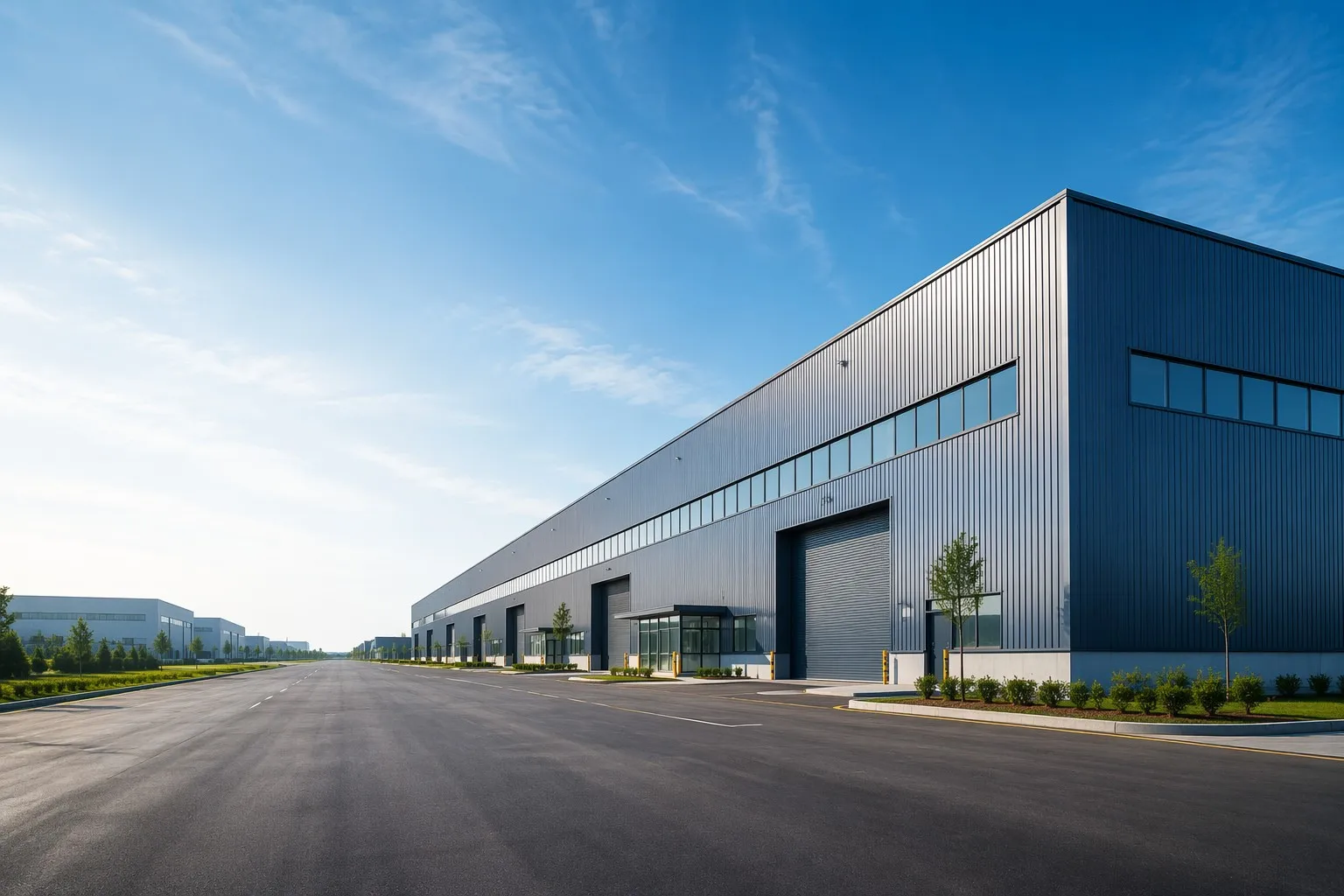
When a buyer in Australia, Chile or Saudi Arabia requests a quotation for a pre-engineered steel building, one of the first questions should never be “what is your price per ton?” It should be: which design code governs the structure? Two projects with identical dimensions can differ by 8–15% in steel tonnage purely because one was designed to AISC 360 and the other to Eurocode 3.
This guide explains the practical differences between the two most common export standards, and what documentation a factory should provide for each.
The Two Standards in Plain Terms
AISC 360 (American Institute of Steel Construction, Specification for Structural Steel Buildings) is the reference standard across the United States, and it is widely accepted in the Middle East, Southeast Asia, Latin America and Africa. It works together with ASCE 7 for loads, AISC 341 for seismic detailing and the AWS D1.1 welding code.
Eurocode 3 (EN 1993) covers steel design in the European Union, the United Kingdom, and is frequently adopted in Africa, Central Asia and parts of the Gulf. It is paired with EN 1991 for actions, EN 1998 for seismic design and EN 1090 for execution and factory certification.
Where the Real Differences Appear
- Load combinations: ASCE 7 uses ASD and LRFD load combinations with resistance factors (φ). Eurocode uses partial factors on both actions and resistances (γM0 = 1.0 for cross-section resistance, γM1 = 1.0 for member stability). The arithmetic is different even when the input loads are the same.
- Deflection limits: ASCE 7 typically limits roof deflection to L/180 for flexible roofs, while Eurocode serviceability limits are often stricter for brittle cladding, commonly L/250 or L/300 depending on the national annex.
- Steel grades: AISC projects commonly specify ASTM A36, A572 Gr.50 or A992. Eurocode projects reference S235, S275 and S355 to EN 10025. Chinese Q235B and Q355B are mechanically comparable to S235JR and S355JR, and Pingchuang supplies mill certificates with equivalence tables for both routes.
- Section shapes: AISC relies heavily on W-shapes and HSS. Eurocode designers frequently use European IPE, HEA and HEB profiles. For welded plate girders the difference is small; for hot-rolled sections the availability of the exact profile drives the design.
- Bolting and welding: AISC works with ASTM A325/A490 bolts and AWS D1.1 welds. Eurocode uses EN 14399 bolts and EN 1090-2 weld quality classes. Bolt hole tolerances are defined differently in each system.
Why This Matters Commercially
If a client receives a quote designed to a code their local authority does not recognise, the structure cannot be permitted — regardless of price. Conversely, over-specifying a heavy code on a light building wastes money. The cheapest route is always to state the governing code in the enquiry, together with the wind speed, snow load and seismic zone from your local annex.
Documentation That Must Ship With the Steel
- Design calculations stamped by a qualified structural engineer, referenced to the specified code.
- Shop drawings showing every member, connection and bolt group.
- A mill test certificate (MTC) for each heat of steel, traceable to the member mark.
- Weld procedure specifications (WPS) and welder qualification records.
- Coating reports: surface preparation grade, dry film thickness and adhesion test results.
- Packing list matched to the erection drawing so site teams can unload in sequence.
How Pingchuang Handles Dual-Code Projects
Our engineering office runs both code libraries. For a typical 5,000 m² warehouse project we produce a comparative study — tonnage and cost under AISC 360 versus Eurocode 3 — so the client can see the commercial effect of the standard before committing. Final drawings, calculations and certificates are issued in the code your authority approves, in English, with units clearly stated in metric or imperial.
Practical Recommendation
Decide the code before tender, not after award. Include in your enquiry: project location, governing code and national annex, wind and snow parameters, seismic category, crane class (if any), and the required coating system. That single paragraph removes 80% of the correspondence that slows export steel projects down.
Need a design package in AISC or Eurocode?
Send your drawings, span, height and site location — our engineering team will reply with a preliminary design, steel take-off and quotation within 24 hours.
Get a Free Quote Now Chat on WhatsApp
Direct inquiry: kevin@steel-structure-manufacturer.com | WhatsApp / Phone: +86-15600895677