Bolted vs. Welded Connections: Which is Better for Rapid Site Assembly?
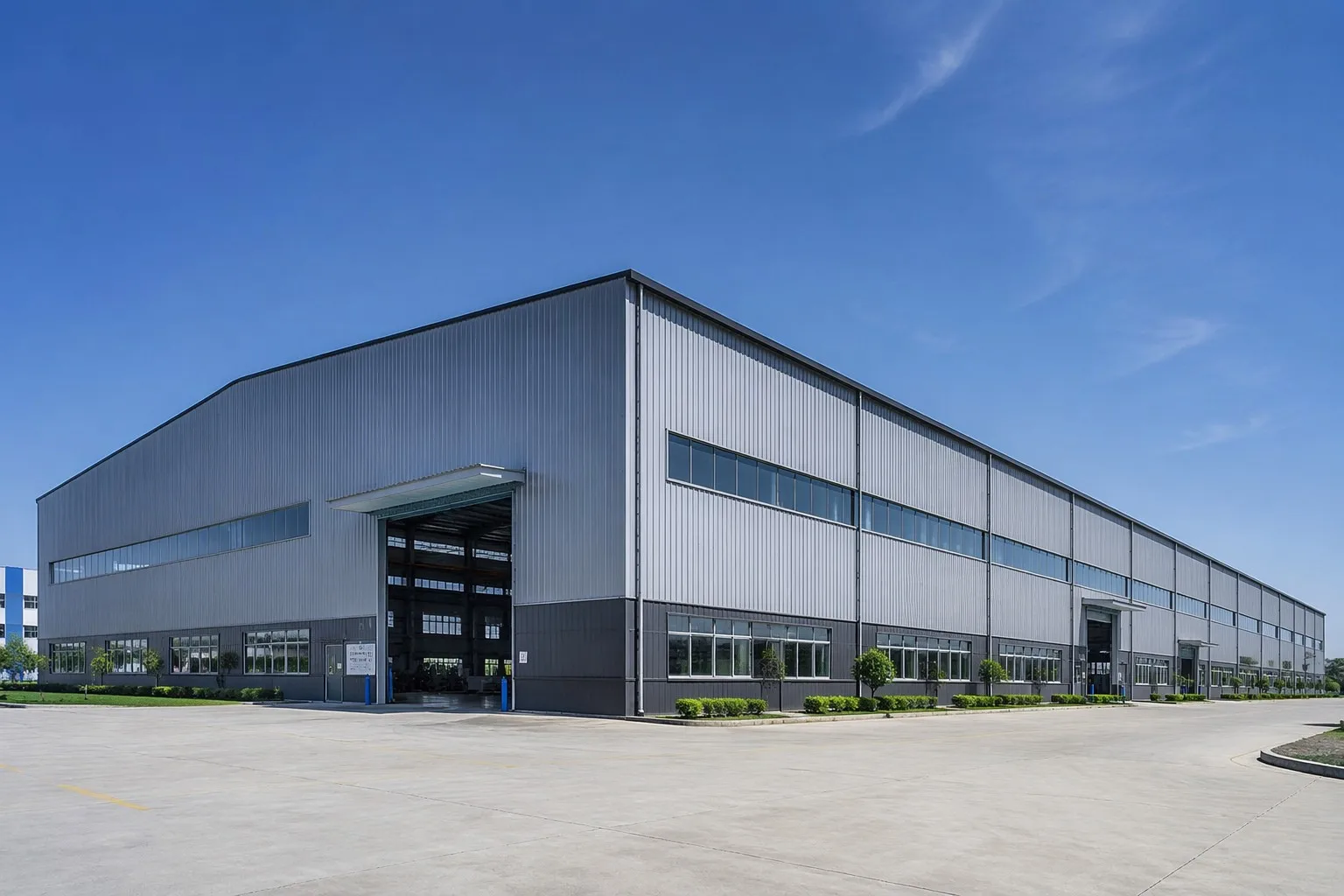
On paper, a fully welded frame is stiffer and uses less steel. In practice, on a site 400 km from the nearest qualified welder, a bolted frame is the reason the building opens on schedule. The correct answer is rarely “all bolted” or “all welded” — it is a deliberate hybrid, and here is how experienced fabricators decide.
The Case for Bolted Connections
- Speed: a trained crew can install 30–60 high-strength bolts per hour. A bolted portal frame bay can be erected in a fraction of the time a field weld requires.
- Weather tolerance: welding demands dry steel and controlled conditions. Bolt tightening is far less sensitive to wind and light rain.
- Inspection: bolt torque can be verified with a calibrated wrench and recorded. Weld quality can only be verified visually, by ultrasonic or radiographic testing.
- Damage tolerance: a bolt can be replaced. A cracked weld in a remote location is a serious problem.
- Disassembly and expansion: bolted frames can be unbolted, relocated or extended — essential for rental and interim facilities.
The Case for Welded Connections
- Material economy: welded moment connections avoid gusset plates, splice plates and bolt groups, often saving 5–10% of the connection steel.
- Rigidity: welded moment frames give full continuity, which matters for seismic frames and for crane brackets with high fatigue demand.
- Visual cleanliness: architectural exposed steel looks better welded, ground and painted.
- Water tightness: a continuous weld cannot leak; bolted assemblies always need sealant detailing.
Rules of Thumb Used by Designers
- Shop weld, site bolt. This is the fundamental principle. Weld as much as possible in the factory under controlled conditions, then use bolted splices and connections in the field.
- Columns to base plates: always bolted. Anchor bolts set in the foundation are cheaper and more tolerant than welding at foundation level.
- Primary beam-to-column connections: bolted end plates for spans under about 30 m; welded or bolted-flange-plus-welded-web for heavier frames.
- Bracing connections: bolted with slotted holes to absorb erection tolerances.
- Crane runway brackets: welded shop assemblies, bolted to columns on site, because fatigue performance at the bracket is critical.
Bolt Types and Specification
Two families dominate export projects. ASTM A325 / A490 high-strength bolts are used with AISC projects; EN 14399 HR or HV systems are used with Eurocode projects. In Chinese plants, grade 10.9S and 8.8S torsional shear bolts are common and are supplied with matching nuts and washers.
Specify the tightening method clearly: turn-of-nut, calibrated wrench, or direct tension indicators (DTI). For slip-critical connections, do not accept snug-tight; require and record the tension check. Bolted connections also need a defined hole tolerance — typically 2 mm oversize for standard holes, with slotted holes only where the design permits.
Quality Control That Protects the Buyer
- Bolt certificates traceable to the production lot, with hardness and proof load data.
- Torque calibration records for the tools used on site.
- Fit-up check before final tightening: maximum 2 mm gap at contact surfaces.
- For welded joints: WPS, welder qualification, and NDT reports — 100% visual plus ultrasonic on full-penetration welds.
- Touch-up coating procedure for all welds and bolt heads after tightening.
The Pragmatic Recommendation
For the vast majority of warehouses, workshops and hangars exported to remote sites, a shop-welded, site-bolted frame with bolted end-plate moment connections is the fastest, most inspectable and most economical solution. Reserve field welding for special conditions: fatigue-critical crane details, seismic moment frames that cannot be bolted economically, and cases where shipping volume penalties make welded assemblies cheaper to transport.
Send us your span, height, crane class and site conditions and we will return a connection strategy with a matching bolt and weld schedule.
Need a bolted-assembly design for a remote site?
Send your drawings, span, height and site location — our engineering team will reply with a preliminary design, steel take-off and quotation within 24 hours.
Get a Free Quote Now Chat on WhatsApp
Direct inquiry: kevin@steel-structure-manufacturer.com | WhatsApp / Phone: +86-15600895677