Hot-Dip Galvanizing vs. Epoxy Painting: Choosing the Right Coating for Coastal Areas
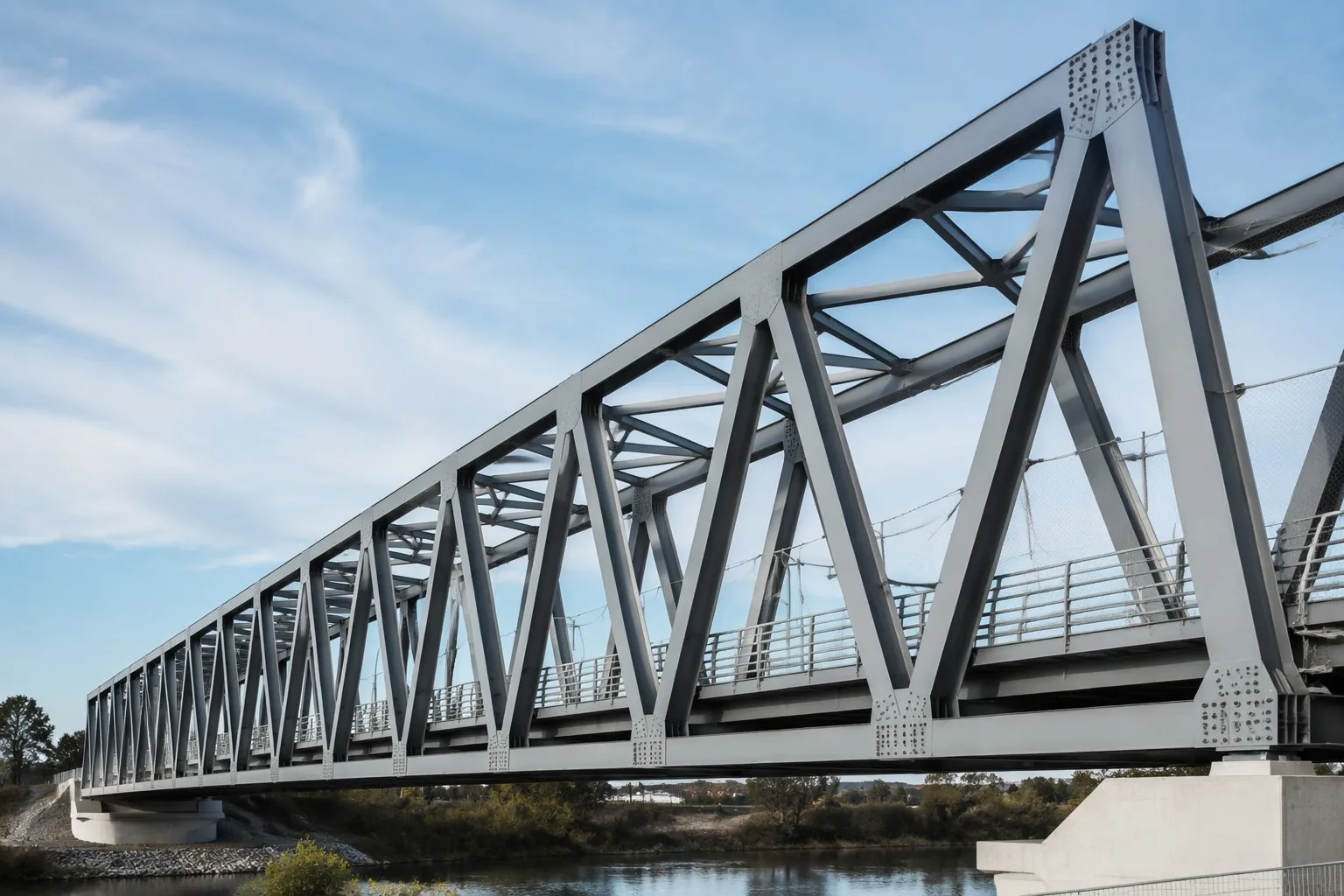
Coastal air carries chlorides, and chlorides defeat most coating systems that were specified for inland weather. Within 1–5 km of the sea, corrosion rates can be five to ten times higher than in a rural inland environment. Getting the coating wrong on a coastal steel building does not mean repainting in twenty years — it can mean rust staining within three.
Understanding the Corrosivity Category First
ISO 12944-2 defines atmospheric corrosivity categories, and every coating decision should start here:
- C2 (rural, low pollution): low corrosion rate, under 1.3 µm/year steel loss.
- C3 (urban, moderate pollution, low chloride): medium, 1.3–25 µm/year.
- C4 (industrial or coastal with moderate salinity): high, 25–50 µm/year.
- C5-I (coastal and offshore, high salinity): very high, 50–80 µm/year.
- CX (offshore, tropical, extreme): above 80 µm/year.
A building 500 m from the shoreline in a tropical climate is C5-I. The same building 15 km inland may only be C3. Distance, prevailing wind, rainfall and humidity all matter, so specify the category explicitly in the purchase order.
Hot-Dip Galvanizing: The Case
- Barrier plus sacrificial protection. Zinc protects steel twice: as a physical barrier, and by sacrificially corroding to protect exposed steel at scratches and cut edges. This self-healing behaviour is its decisive advantage.
- Longevity. To ISO 1461, a 85 µm zinc coating on structural steel typically delivers 25–40 years in a C4 environment and 20–30 years in C5-I.
- Coating is metallurgically bonded to the steel via the zinc-iron alloy layers, so it does not delaminate like paint.
- Complete coverage including internal and external surfaces, edges and hard-to-reach areas, provided the item fits in the kettle and the design has proper vent and drain holes.
- Low maintenance and no site touch-up over large areas.
Limitations: kettle size restricts the largest single members or requires double-end dipping (a scarf joint, with a bare band that must be protected); it is not suitable for very thin plate without distortion risk; it cannot be applied over existing paint; initial cost is higher than a standard two-coat paint system; and site welding burns the coating, requiring repair.
Epoxy Paint Systems: The Case
- Scalability. Painting has no size limit — a 40 m plate girder is sprayed in a booth, not dipped.
- Aesthetics. Unlimited colour and gloss control, which matters for architectural and commercial buildings.
- Cost efficiency in moderate environments. A three-coat system is usually cheaper than galvanizing for a C3 environment.
- Compatibility with intumescent fire protection and with subsequent topcoats specified by an architect.
Limitations: barrier protection only — one damaged spot rusts and spreads under the film; requires strict surface preparation (typically Sa2.5 to ISO 8501-1) and climate control during application; more susceptible to edge failure (edges must be stripe-coated); and site repair is much more frequent.
Recommended Systems by Zone
- C2–C3: blast to Sa2 or Sa2.5, epoxy primer 80 µm + polyurethane topcoat 60 µm. DFT 140–180 µm.
- C4 (10–20 km from coast): zinc-rich epoxy primer 80 µm + epoxy MIO intermediate 120–160 µm + polyurethane topcoat 60 µm. DFT 260–300 µm. Durability 15–25 years.
- C5-I (coastal up to 5 km): hot-dip galvanizing to ISO 1461 at 85 µm minimum, optionally with a duplex system — galvanizing plus a compatible paint topcoat giving 40+ years in many reports. Alternatively, a heavy four-coat paint system at 320–400 µm DFT.
- Immersion or splash zone: galvanizing plus a duplex topcoat, or a high-build glass-flake epoxy or polyurethane system.
The Duplex Advantage
Combining galvanizing with a paint topcoat is not double-counting; the two systems protect each other. The paint slows the zinc corrosion rate, and the zinc protects the steel where the paint is damaged. In C5 environments, a duplex system can deliver service life 1.5–2.5 times that of galvanizing alone — which is why it is the preferred specification for major port and coastal infrastructure.
Practical Design Rules for Coastal Steel
- Eliminate water traps: no unsealed back-to-back angles, no open box sections without drainage, no gaps under base plates.
- Detail a 50 mm concrete plinth around base plates to keep steel out of standing water and splash.
- Avoid mixing galvanized steel with stainless or copper fixings without an insulating washer — galvanic corrosion is accelerated in saline air.
- Specify the coating system on the drawing, in the purchase order, and in the inspection plan, with the DFT values and the test standard stated.
- Require touch-up procedures and materials to be shipped with the steel, not sourced locally.
Summary
For a building within roughly 5 km of the coast or in a tropical marine climate, hot-dip galvanizing — preferably as a duplex system — is the safer investment. For inland and moderate environments, a well-applied epoxy system is more economical and more flexible in colour. Send us your site coordinates and intended design life, and Pingchuang will specify the coating system and record the DFT requirements in the contract documents.
Building within 20 km of the sea?
Send your drawings, span, height and site location — our engineering team will reply with a preliminary design, steel take-off and quotation within 24 hours.
Get a Free Quote Now Chat on WhatsApp
Direct inquiry: kevin@steel-structure-manufacturer.com | WhatsApp / Phone: +86-15600895677